Geothermal energy is described everywhere as ecological and renewable, but how does its impact on the environment actually compare with the other energy sources used for heating? We looked at the five main types used in Quebec and ranked them, from worst to best.
Fifth: oil. The equipment here is an oil furnace or an oil boiler, still common in older Quebec homes. Put simply, every other energy source on this list is cleaner. Burning oil is heavily polluting: carbon dioxide, nitric oxide, nitrogen dioxide and more. Its impact is severe, and there is no version of it that is not, which is why replacing an oil furnace is the single biggest environmental improvement most homes can make.
Fourth: natural gas. The equipment is a gas furnace or boiler, sometimes paired with a heat pump in a bi-energy setup. Natural gas has a better environmental record than coal or oil, and its combustion is the cleanest of the fossil fuels. But it arrives from Alberta by pipeline, which is contested, and it can contain a proportion of shale gas, whose extraction methods are contested in their own right. The overall impact stays firmly negative.
Third: electricity. In Quebec, electric heating is generally considered kinder to the environment than a fossil-fuel furnace, and reasonably so: hydroelectricity emits very little greenhouse gas next to oil or gas. It sits third rather than higher because the dams themselves have real effects on landscape and biodiversity. The equipment in this band is anything that turns electricity straight into heat: baseboards, radiant floors, hydronic boilers and electric furnaces. Air-source heat pumps run on the same electricity but use far less of it, which lifts them well above plain resistance heating.
Second: biomass. The equipment is a wood stove, a pellet stove or a biomass boiler. This covers solid fuels such as hardwood, pellets and chips, liquids such as wood oils and bioethanol, and gases such as biomethane. Biomass does not create new carbon dioxide when it is burned; it releases part of what the plant already absorbed. What holds it back is that harvesting, processing and transporting it takes considerable energy, usually fossil, which darkens the carbon footprint.
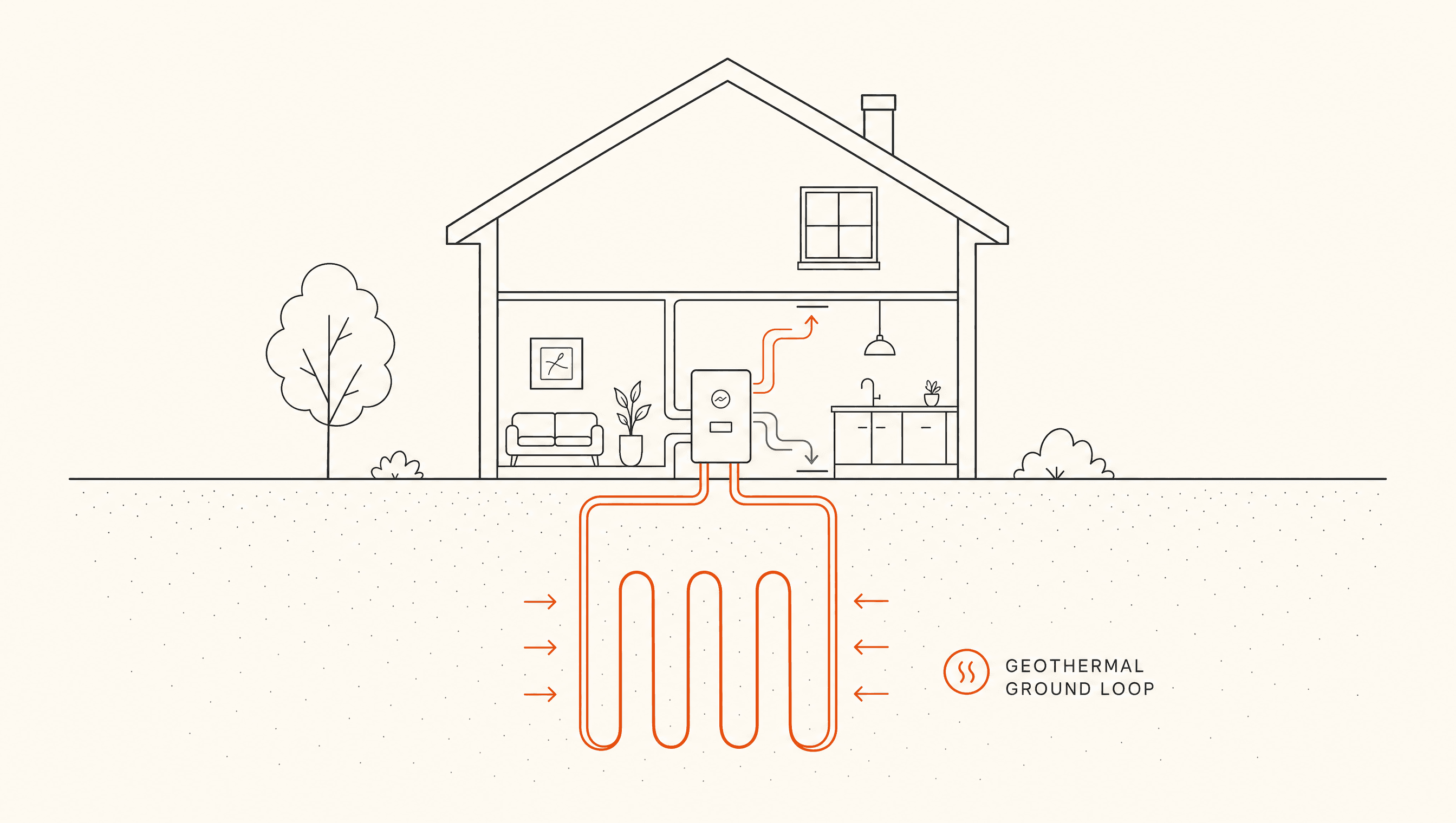
First: geothermal. The equipment is a ground-source heat pump connected to a buried loop. Drawing on renewable heat already in the ground, a geothermal system emits no carbon dioxide, no carbon monoxide and no greenhouse gases in operation. Its only real environmental cost is the electricity the heat pump draws, and that is lower than every other system here: up to four times less than electric baseboards, which also eases demand on the grid during winter peaks. Call the impact close to nil. It also cuts heating costs by up to 70%, and our article on what a geothermal installation costs and returns sets out the arithmetic.
If you want to know whether your lot suits a ground loop, or how geothermal would compare with what you have now, speak with one of our specialists. Our piece on why homeowners switch to geothermal covers the rest of the case.